Friday, 2 March 2012
Tuesday, 21 February 2012
Friday, 6 January 2012
Haunted by the Nightmare, Animatic...
This is my animatic, of opening of film "Haunted by the Nightmare", it takes loads of time, as you need to create the storyboard, draw the pictures, and then use some image editor, like paint or photoshop, and edit pictures, add elements, move them and each change save as the new image.
By doing my animatic this way, I have created over 60 images, so the animatic looks quite good. It is not proffesional animatic as in real studios, because they have very good art skills, and proper programs to do it. Also they have better experience in editing that kind of things
There is very good and interesting example of proffesionally made animatic:
Wednesday, 4 January 2012
Final Cut Introduction
On the media flexible day, we have been recording the short 30 seconds clip to the test the blue screen technology and learn how to use the program called Final Cut. We have went to the hall where we have the blue curtains, so the colour of the background is blue to use the blue screen technology. Me and my friend have recorded the short news report from white house just before the alliens blows it up. Now we want to use the program Final Cut to cut out the blue curtain background and replace it with the white house clip where it get blows after 25 seconds.
We would continue working and developing our skills on using this program however the program says that the file format that we have recorded isn't read by the Final Cut. We need to change the format so we can keep working and developing our skills in editing the videos. This will help us in future to do more advanced editing without guide, because we will allready know how to use that kind of programs.
I tried to find with the teacher some kind of program that would change the format, so we can continue working on the video. After some time, Mr Morris found the program, and changed the file format, so we could come back to the Apple Mac's room, and start using Final Cut.
It wasn't easy task because we had to set the intensity of the blue colour so the blue curtains become invisible, in fact me and my friends did good job, however, in the moment when the alliens attack the white house, part of my body becomes invisible as well. However it looks quite and a bit comedic, as i didn't use timing well, and while the explosion happened, i was still reading. However it looked well, and it seems that flames that came burned me.
Moodboard - Horror
My storyboard have different key concepts:
1. First concept is haunted house, in the right button corner. It present different pictures showing the old, scary, haunted houses, as the film Haunted by the Nightmare, happens mainly in the house.
2. Second concept is the family. It is very important concept as it follows the thread of the film. The parents, that break up, children that loose one of the parents. Arguments between family, it all links to the horror that happens in the haunted house.
3. Third concept is Ghost, the evil, that terrorise the family, and make a lot of trouble, not physically but mentally. The pictures presents evil ghost in different forms. As the ghost, death, monster, etc.
4. Concept is the Innocence. In reality the ghost isn't bad. It just can't find the peace, way to get out of the real world. It doesn't make any damage, and don't want to do anything bad to the family. The ghost is just a little boy that can't find way back, because he is trapped in the house.
5. Fifth concept is the most weird one. It is the camera. The way film shows the story is through the video blog. One of the kids, has the dream to become the director, and make films. He just records his normal life, but by mistake he records, the thing that he shouldn't record. The ghost walking in the house.
Friday, 2 December 2011
preliminary task - Media Studies
This is my preliminary task. I think that it is quite alright. I am mostly happy at the match on action. It is well fitted. Every move and moment of the action. Cuts are everytime the action is changed, when the doors are opened, when the doors are closed, when person enters the room etc.
However, in this video there is no 180º Rule used. When the conversation is happening, the camera just stays at the same place. I would like to improve my preliminary task so it would contain the 180º Rule, and would look even more professional.
If I would film it again I would try to speak more louder, so everyone can hear what the conversation is about quite well.
Tuesday, 22 November 2011
Narrative Theories Research Task
Narrative is the way that the media text prestents the story/plot through the sequence of actions that happens in it. The example of narrative is "Once upon a time" which describes the opening of the plot. We allready know that the story is set in the past, because of the words "upon a time", while "Once" suggest that it may be some fictional world, not similar to our.
The narative is very important because it gives the idea of what is happening in the film. It gives simple clues that suggest that film may be specific genre or that some sort of action will happen.
There are three narrative theories. Todorov's Theorem about Equilibrium, Vladimir Propp's Theory about Characters and Binary Opposition.
The Equlibrium Theory breaks the plot the film/story into three:
Equilibrium - Things that happens in everyday life,
Diseuilibrium - Something happens that breaks everyday life,
New State of Equilibrium - The disequilibrium is repaired,
websites:
http://pl.wikipedia.org/wiki/Narracja
http://en.wikipedia.org/wiki/Narrative
http://dictionary.reference.com/browse/narrative
http://www.longroadmedia.com/resources/Narrative%20Theory%20Hand-Out.pdf
Preliminary Research
The continuity editing is: ......
There are two different editing types. Temporal Cutting and Spatial Cutting.
* Temporal Cutting connects shots to support narrative development. It may be linear progression or not, establishes the progression of time.
* Spatial Cutting creates unified space through the editing shots from different angles and framing shot/reserve shot.
Spatial Editing follows several rules:
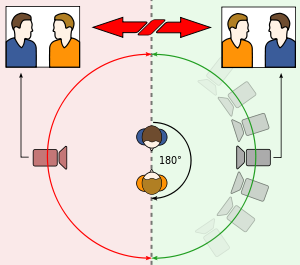
• 180 Degree Rule - Mostly used in conversation between two characters. This rule lets camera to change position anywhere, as long as it doest cross the second half of the scene (+180º). Also if the camera is moving, it needs to be moved more then 30º
• Shot/Reverse shot - is the shot showing two characters looking at each other, generally used in the conversations. The camera is showing person that is speaking, and we can see him speaking and the shoulder of person that listen him. If second character starts to speak the camera change the position but the rule is same. Also this shots are followed by the 180º rule.
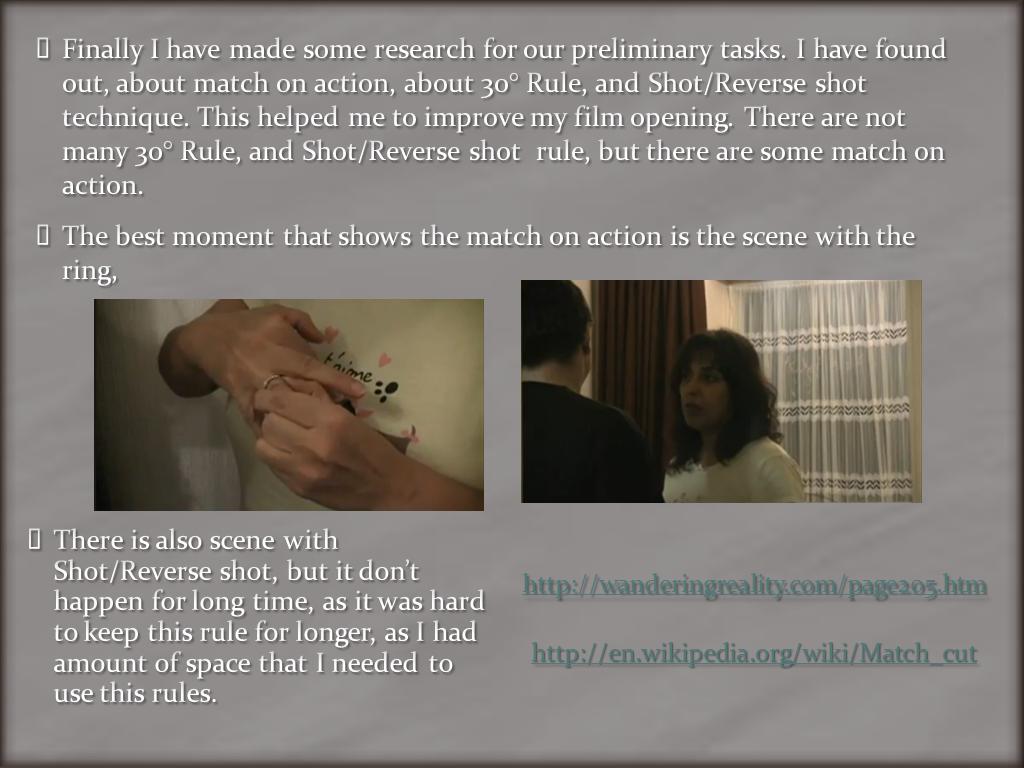
• Match on Action Shot - Is the technique to edit well frames, so they are matching the action that happens. For example, there is one shot showing someone coming, another shot is when it touch the book, next shot shows opening the book, etc. This technique is helpful as it is the nice and interesting way to show some actions that characters do. For example in the action-adventure films, they use it to show the clue, secret or even the treasure.
There are two different editing types. Temporal Cutting and Spatial Cutting.
* Temporal Cutting connects shots to support narrative development. It may be linear progression or not, establishes the progression of time.
* Spatial Cutting creates unified space through the editing shots from different angles and framing shot/reserve shot.
Spatial Editing follows several rules:
• 180 Degree Rule - Mostly used in conversation between two characters. This rule lets camera to change position anywhere, as long as it doest cross the second half of the scene (+180º). Also if the camera is moving, it needs to be moved more then 30º
• Shot/Reverse shot - is the shot showing two characters looking at each other, generally used in the conversations. The camera is showing person that is speaking, and we can see him speaking and the shoulder of person that listen him. If second character starts to speak the camera change the position but the rule is same. Also this shots are followed by the 180º rule.
• Match on Action Shot - Is the technique to edit well frames, so they are matching the action that happens. For example, there is one shot showing someone coming, another shot is when it touch the book, next shot shows opening the book, etc. This technique is helpful as it is the nice and interesting way to show some actions that characters do. For example in the action-adventure films, they use it to show the clue, secret or even the treasure.
Websites:
Friday, 4 November 2011
Tuesday, 1 November 2011
Questionaire
Questionnaire
1. What kind of horror films you enjoy most?
* Ghosts
* Zombie
* Devil
* Bloody
* Others: …………………………………………
2. Do you think that the Ghost horrors are good/interesting?
* Yes
* No
3. What is the best place to be haunted by the ghost?
* Park
* House
* Graveyard
* Others: ………………………………………….
4. Should ghost be good or evil?
* Good
* Evil
5. Is it a good idea to show audience story through the camera in the horror film? (Similar to paranormal activity)
* Yes
* No
6. What words should be used in the title of the horror film about ghost?
* Haunted
* Scary
* Dead
* Mystery
* Demon
* Blood
* Others: ………………………………………….
7. Do you think the blood is important part of a horror film?
* Yes
* No
8. Do you think that the horror movies are suitable for teenagers (16+)?
* Yes
* No
* Sometimes
9. Does horror movies
* Ghosts
* Zombie
10. What kind of horror films you enjoy most?
* Ghosts
Monday, 31 October 2011
Treatment
The film “Haunted By The Nightmare” is about the family which tries to live easily and normally. However because of argues the family breaks. The Father leaves the wife and 2 children. They need to find a new place to live. The place they found is haunted by the ghost. One of the kids Max, have the dream to be the director so he is recording lots of things around that happens at home and outside of it. When the family moves to the haunted house the Max starts to record the things that happen in this home. The ghost is very nasty and makes the bad things to the family.
Firstly it was moving objects, however later on it started to be more dangerous. The Ghost started to be aggressive and dangerous to the new occupants. The family tries to do something to live happily however the ghost stands on their way to the happy life. The finance problems don’t make the whole problem easier. There is the war between family and the ghost.
The film take place in different locations but the main one is the haunted house, where the ghost is doing bad things. Sometimes action happens in school, where kids go to, or work place where the mom works. The location is not one of the most interesting things in the movie because it happens in normal English style house. However the things that happen inside make a very big impact on the way that family acts and behave.
The film doesn’t have any other interesting characters. There are some friends of kids that tries to help them but they not really sure if the ghost really exist. They don’t want to stand face to face with the danger that happens in friend’s house.
Firstly it was moving objects, however later on it started to be more dangerous. The Ghost started to be aggressive and dangerous to the new occupants. The family tries to do something to live happily however the ghost stands on their way to the happy life. The finance problems don’t make the whole problem easier. There is the war between family and the ghost.
The film take place in different locations but the main one is the haunted house, where the ghost is doing bad things. Sometimes action happens in school, where kids go to, or work place where the mom works. The location is not one of the most interesting things in the movie because it happens in normal English style house. However the things that happen inside make a very big impact on the way that family acts and behave.
The film doesn’t have any other interesting characters. There are some friends of kids that tries to help them but they not really sure if the ghost really exist. They don’t want to stand face to face with the danger that happens in friend’s house.
Thursday, 20 October 2011
Audience Research
Why Audience Research is important?
Audience Research is very important for creators of the media text. It allows them to know what are the people who watch it, what they like, how they react on different scenes etc. It is waste of time and money if company makes a film worth millions of dollars, and no one would like to watch it because it is not enough exciting or interesting. The company wouldn't make any profit at all.
How Audiences are categorized?
The audiences are categorized in to different categories. The demographic devides them into certain categories like age, gender, hobby, occupation, religion, nationality etc. while the social economic demographic devides people into different social classes. A - upper class, B middle class, C1 lower class, C2 working class, D... etc.
This helps the makers of the media text, to specify, what kind of audience will want to buy their product. For example if they will create sci-fi film, audiences will be people interested with the space, robots, future, science or supernatural things. So there is a large variation of the people who will or may watch this film.
Key Audiences Theories, that explain the Media's Relationship with the Audience
The best theories that explain the relationship between media and audience are:
* Hypodermic Needle Model
* Two Step Flow Model
websites:
http://www.c4life.com/media/ecom/cat/self-hypnosis1.jpg
http://blackpoolmedia.files.wordpress.com/2008/06/blog-two-step-flow-diagram2.png?w=267&h=317
Audience Research is very important for creators of the media text. It allows them to know what are the people who watch it, what they like, how they react on different scenes etc. It is waste of time and money if company makes a film worth millions of dollars, and no one would like to watch it because it is not enough exciting or interesting. The company wouldn't make any profit at all.
How Audiences are categorized?
The audiences are categorized in to different categories. The demographic devides them into certain categories like age, gender, hobby, occupation, religion, nationality etc. while the social economic demographic devides people into different social classes. A - upper class, B middle class, C1 lower class, C2 working class, D... etc.
This helps the makers of the media text, to specify, what kind of audience will want to buy their product. For example if they will create sci-fi film, audiences will be people interested with the space, robots, future, science or supernatural things. So there is a large variation of the people who will or may watch this film.
Key Audiences Theories, that explain the Media's Relationship with the Audience
The best theories that explain the relationship between media and audience are:
* Hypodermic Needle Model
* Two Step Flow Model
Hypodermic Needle Model - this models suggest that the media is capable of mass manipulation, and people believe in it. The best example of it is when you see the advertise in the TV and it shows some cleaning product that is so great that little amount of it will clear everything very well. So people believe it and they buy this product. The same thing appears in the film. If the film shows that the alliens landed on the earth people may think that this is true and they will start to believe. Also there may be people who will watch it and agree that maybe alliens are existing but they havn't landed on the earth.

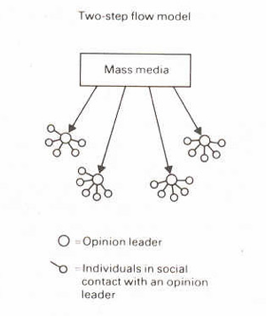
Two Step Flow Model - this model suggest that the media is passing on across people. So for example if i have watched some nice interesting film, i will tell it my friends, and persuade them to watch it because it is so good. They will watch it and persuade other friends to watch it. And so on... until thousands or millions of people know about the current media text. It is the one of the best ways of advertising the media text product.websites:
http://www.c4life.com/media/ecom/cat/self-hypnosis1.jpg
http://blackpoolmedia.files.wordpress.com/2008/06/blog-two-step-flow-diagram2.png?w=267&h=317
Tuesday, 11 October 2011
Genre Research
What is Genre?
Genre is the type/style of the film/play. It helps to recognise what the film is about and make the audience to understand and/or suspect what will happen in the film. The conventions are the most important in creating genre as they are the key concepts that create the genre and make them recognise.
For example:
Convention - kissing.
Genre - Romantic Film
It make audience allready to know that the genre of the film is romantic film, as we can see the love happening there.
Advantages and Disadvantages:
The advantage of genre is that the audience are easily know what they can expect. For example parents know that they can't go with little child on "Final Destination" because the genre of this film is horror, so parents allready know that this film is not well for their childs.
Other people may not like some type of film, so they know that they will not spend their money on the film that they will not enjoy.

However, there are some disadvantages as well. As the time goes, the new genres are created, and new conventions are presented. Sometimes the genres are mixed, and it is really hard to decide what type of genre it is. When the hybrid genre appears, like comedy/horror, then its hard to decide what the film is more about. Also some people may like comedy but dont like very much the horror films, so probably they will not want to see this film.
There are lots of different conventions that suggest that the film is this genre however the film is totally about something different, which later on build big confusion in the audience mind.
The genre I have chosen for my film and its conventions:
The genre I have chosen for my film is horror mixed with bits of documentary. It is because the film is going to be about ghost, and haunted house, however, the film is presented in documentary way. It is because the film is recorded with handheld camera, also the hero is the person who is recording everything. The film is quite similar to the "Paranormal Activity", as it as well show the story by the camera used in the
Genre is the type/style of the film/play. It helps to recognise what the film is about and make the audience to understand and/or suspect what will happen in the film. The conventions are the most important in creating genre as they are the key concepts that create the genre and make them recognise.
For example:
Convention - kissing.
Genre - Romantic Film
It make audience allready to know that the genre of the film is romantic film, as we can see the love happening there.
Advantages and Disadvantages:
The advantage of genre is that the audience are easily know what they can expect. For example parents know that they can't go with little child on "Final Destination" because the genre of this film is horror, so parents allready know that this film is not well for their childs.
Other people may not like some type of film, so they know that they will not spend their money on the film that they will not enjoy.
There are lots of different conventions that suggest that the film is this genre however the film is totally about something different, which later on build big confusion in the audience mind.
The genre I have chosen for my film and its conventions:
The genre I have chosen for my film is horror mixed with bits of documentary. It is because the film is going to be about ghost, and haunted house, however, the film is presented in documentary way. It is because the film is recorded with handheld camera, also the hero is the person who is recording everything. The film is quite similar to the "Paranormal Activity", as it as well show the story by the camera used in the
Wednesday, 14 September 2011
My Production, first steps:
The Genre of my film: Horror = Ghost, haunted house, death, children, darkness.
Equilibrium Theory -
1. The whole family lives in house hapily,
2. Parents break up. Mother and 2 children need to find other and cheaper house. They find the old house, and decide to live there,
3. They find of that the house is haunted, by the little boy,
4. They try to find out the way to get rid of him,
Equilibrium Theory -
1. The whole family lives in house hapily,
2. Parents break up. Mother and 2 children need to find other and cheaper house. They find the old house, and decide to live there,
3. They find of that the house is haunted, by the little boy,
4. They try to find out the way to get rid of him,
5. They find out the dead body, they burry it, and the boy leaves the house happily. The family, is starting they normal life again.
Tuesday, 13 September 2011
A Movie Poster
The film poster i have choosen is "Prince of Persia". The genre of this film is action, with a bit's of adventure.
3 codes and conventions of this poster are:
* The action happen in different locations, which suggest that it may have parts of adventure in the film.
* The style of clothes suggest that the film happens in the past.
* Sword and dagger suggest, that the film will have lots of action scenes with sword fighting in it.
There are also signifiers in the movie postar that signify different meaning to the audience. For example:
* Skeletons on the button of the poster suggest, death, violence, danger etc. This show that the film have some violence and action scenes.
* Dagger is yellow shining, which is a quite unusual thing to see. This presents that the dagger is key item in the film, as yellow suggest gold and treasure, or something very worthy. Also it may suggest that the dagger has some special power.
Denotative levels and connotative levels of the poster are:
* The weather is dull and sad, - this show that the atmosphere of the film is sad and unhappy. It may contain some sad scenes. Also it may represents darkness, evil and mistery, as clouds create effect of confusion.
* There are 3 characters, hero, heroine and villain, - this are the main characters in the film,
* There is battle happening at the button of the poster,
* Hanging skeletons,
3 codes and conventions of this poster are:
* The action happen in different locations, which suggest that it may have parts of adventure in the film.
* The style of clothes suggest that the film happens in the past.
* Sword and dagger suggest, that the film will have lots of action scenes with sword fighting in it.
There are also signifiers in the movie postar that signify different meaning to the audience. For example:
* Skeletons on the button of the poster suggest, death, violence, danger etc. This show that the film have some violence and action scenes.
* Dagger is yellow shining, which is a quite unusual thing to see. This presents that the dagger is key item in the film, as yellow suggest gold and treasure, or something very worthy. Also it may suggest that the dagger has some special power.
Denotative levels and connotative levels of the poster are:
* The weather is dull and sad, - this show that the atmosphere of the film is sad and unhappy. It may contain some sad scenes. Also it may represents darkness, evil and mistery, as clouds create effect of confusion.
* There are 3 characters, hero, heroine and villain, - this are the main characters in the film,
* There is battle happening at the button of the poster,
* Hanging skeletons,
Friday, 9 September 2011
Glossary
1. Key Concepts:
* Media Language - How do they convey meaning.
* Audience - Who is watching.
* Representation - How are things, places and people portayed in the media.
* Institution - Who made/owns it.
2. Media terms:
The Media - All the public forms of mass communication combined.
Media - All the industrial forms.
Media Text - The invidual results of media production.
Medium - Invidual forms of media.
3. Camera Angles:
Birds eye view - Show enviroment, scenery where it take place. Godlike position.
Eye view - neutral position, often use for dialogue.
High angle - things seems less scary or less important.
Low angle - thing seems more scary and bigger, also more powerfull.
Child eye view/ Waste level - making feeling intimacy.
Ground level - builds up tension and mistery.
4. Camera Shots:
ECU - Extreme Close Up - show emotions and emphasis.
CU - Close Up - emphasis and emotions take us to mind.
MCU - Medium Close Up - dialogue shot
DT - Dutch Tilt - use for disorientation
MS - Medium Shot - shows interaction, often in action scenes.
MLS - Medium Long Shot - character and enviroment is in equal ammount.
LS - Long Shot - shows whole character.
ELS - Extreme Long Shot - establishing shot which is used to set the scene.
5. Camera Movement:
Zoom - used to take the audience into or away from the subject.
Pan & Tilt - used for following the subject, useful during slow scenes such as conversations.
Handheld - produses a jerky movement, creating a sense of reality/chaos.
Pedestal - used to follow for both slow and action scenes due to the smooth wide range of motion, primarily used in television studios due to the smooth flooring required for the wheels.
Tracking/Dolly - used to follow the action of a scene in a smooth manner. Requires time to lay down the tracks and set up the shot.
Crane - often used to take the audience into or away from a scene. Gives a varied range of motion which is useful during action moments.
Steadicam - used to follow the action in a smooth manner, useful for making the audience feel part of the action without distracting or providing jerk movement.
6. Sound:
Diagetic Sound - Sound or music that is recorded on set as it happens. This will include dialogue and sounds which take place within the film
Non-Diagetic Sound - Music or sound which is added to the film during the editing process. Most often, non-diagetic sound is music, which is used to create atmosphere or emotion.
7. X:
Denotations - what can you we see in the picture/shot.
Connotations - what does the image/shot suggest or imply
8. Mise En Scene:
Mise En Scene - What is put into a scene, it is what visual information is put in front of the camera by its makers and why. It communicates essential information to the audience.
5 Elements of Mise En Scene:
* Setting and Props,
* Costume Hair and Makup,
* Face Expression and Body Language,
* Lighting and Colour,
* Possition of Character/Object
9. Narrative:
Story - a sequence of events, known correctly as a plot.
Narrative - the way those are put together to be presented to an audience.
10. Equilibrium Theory:
1. Equilibrium
2. Disequilibrium
3. Recognition of Equilibrium
4. An Attempt to repair Equilibrium
5. New State of Equilibrium
11. Binary Oppositions - different oppositions, eg, Good/Evil, Poor/Rich, Love/Anger, Light/Dark etc.
12. U&G and HN Models:
Hyperdemic Needle Model - explains that people believe every part of every media message they are told. They consume it as if beign brainwashed. The audiences are passive.
Uses and Gratification - sees human being as desion-makers and instead of just absorbing the message we makes choices and selection on what to watch, what to believe and how to watch it. The audiences are active.
* Media Language - How do they convey meaning.
* Audience - Who is watching.
* Representation - How are things, places and people portayed in the media.
* Institution - Who made/owns it.
2. Media terms:
The Media - All the public forms of mass communication combined.
Media - All the industrial forms.
Media Text - The invidual results of media production.
Medium - Invidual forms of media.
3. Camera Angles:
Birds eye view - Show enviroment, scenery where it take place. Godlike position.
Eye view - neutral position, often use for dialogue.
High angle - things seems less scary or less important.
Low angle - thing seems more scary and bigger, also more powerfull.
Child eye view/ Waste level - making feeling intimacy.
Ground level - builds up tension and mistery.
4. Camera Shots:
ECU - Extreme Close Up - show emotions and emphasis.
CU - Close Up - emphasis and emotions take us to mind.
MCU - Medium Close Up - dialogue shot
DT - Dutch Tilt - use for disorientation
MS - Medium Shot - shows interaction, often in action scenes.
MLS - Medium Long Shot - character and enviroment is in equal ammount.
LS - Long Shot - shows whole character.
ELS - Extreme Long Shot - establishing shot which is used to set the scene.
5. Camera Movement:
Zoom - used to take the audience into or away from the subject.
Pan & Tilt - used for following the subject, useful during slow scenes such as conversations.
Handheld - produses a jerky movement, creating a sense of reality/chaos.
Pedestal - used to follow for both slow and action scenes due to the smooth wide range of motion, primarily used in television studios due to the smooth flooring required for the wheels.
Tracking/Dolly - used to follow the action of a scene in a smooth manner. Requires time to lay down the tracks and set up the shot.
Crane - often used to take the audience into or away from a scene. Gives a varied range of motion which is useful during action moments.
Steadicam - used to follow the action in a smooth manner, useful for making the audience feel part of the action without distracting or providing jerk movement.
6. Sound:
Diagetic Sound - Sound or music that is recorded on set as it happens. This will include dialogue and sounds which take place within the film
Non-Diagetic Sound - Music or sound which is added to the film during the editing process. Most often, non-diagetic sound is music, which is used to create atmosphere or emotion.
7. X:
Denotations - what can you we see in the picture/shot.
Connotations - what does the image/shot suggest or imply
8. Mise En Scene:
Mise En Scene - What is put into a scene, it is what visual information is put in front of the camera by its makers and why. It communicates essential information to the audience.
5 Elements of Mise En Scene:
* Setting and Props,
* Costume Hair and Makup,
* Face Expression and Body Language,
* Lighting and Colour,
* Possition of Character/Object
9. Narrative:
Story - a sequence of events, known correctly as a plot.
Narrative - the way those are put together to be presented to an audience.
10. Equilibrium Theory:
1. Equilibrium
2. Disequilibrium
3. Recognition of Equilibrium
4. An Attempt to repair Equilibrium
5. New State of Equilibrium
11. Binary Oppositions - different oppositions, eg, Good/Evil, Poor/Rich, Love/Anger, Light/Dark etc.
12. U&G and HN Models:
Hyperdemic Needle Model - explains that people believe every part of every media message they are told. They consume it as if beign brainwashed. The audiences are passive.
Uses and Gratification - sees human being as desion-makers and instead of just absorbing the message we makes choices and selection on what to watch, what to believe and how to watch it. The audiences are active.
About Me
My name is Cezary Cieszynski. I was studying Media Studies, last year as a GCSE. I decided to keep studying it, so i am studing now A level Media Studies.
My favourite films are Transformers and Star Wars.
I have big respect to creators of Star Wars, because they have put lot of effort and money into this film, to create all the lighting, robots, spaceship models or costumes of alliens etc.
Transformers is my favourite film as I always watched it when I was kid.
In free time I am listening rap music, or playing games.
Subscribe to:
Posts (Atom)